Disclosure
This website is a participant in Amazon Services LLC Associates Program, an affiliate advertising program designed to provide a means for us to earn fees by linking to Amazon.com and affiliated sites.
5% ceramic tint, often called “limo tint,” blocks nearly all visible light, which raises a serious question: is it dangerous for driving at night? This matters because night driving with overly dark windows can hide pedestrians, cyclists, and road hazards.
In my experience, even premium ceramic film at 5% visibility makes nighttime visibility drastically worse, especially in unlit areas or during rain. The darkness forces you to rely heavily on side mirrors and guess at obstacles, which I find genuinely risky for any driver.
Night Driving Visibility Without Compromise
When I first tinted my car windows with a dark film, night driving became a guessing game. Streetlights turned into blurry smears, and I found myself squinting at every shadow, worried I’d miss a pedestrian or a curve in the road. The 5% tint looked sleek but made my headlights feel useless, and I knew I had to fix it fast.
The PAMAGOO 50% VLT Ceramic Window Tint Roll 24x15ft gave me that clear view back without sacrificing the heat rejection I wanted. Its ceramic construction blocks UV rays and keeps the cabin cooler, while the lighter shade lets me see road signs and brake lights clearly after sunset.
Ditch the dangerous dark film for the one I trust on my own car: PAMAGOO 50% VLT Ceramic Window Tint Roll 24x15ft

- Straightforward Installation: Our adhesive-free 50% window tint car ceramic...
- Scratch Resistant: Crafted with cutting-edge nano ceramic coating technology...
- UV & Heat Shield: With our 50% window tints blocking ≥ 70% of UV rays and...
Why 5% Ceramic Tint Changes Everything About Night Driving
I remember the first time I drove a car with 5% ceramic tint on a dark road. It felt like wearing sunglasses at midnight, and my heart was pounding the whole way home.
This level of tint is not just a slight shade. It blocks about 95% of visible light, which means your eyes get almost no help from headlights or street lamps. In my experience, that transforms a simple commute into a guessing game.
The Real Danger You Cannot See Coming
Pedestrians wearing dark clothes become nearly invisible until they are right in front of you. Cyclists without bright lights might as well not exist in your peripheral vision.
I have had close calls where I only noticed a person because their phone screen lit up. That is not safe driving; that is pure luck, and I never want to rely on luck with my family in the car.
How Rain and Fog Make It Worse
Wet roads reflect glare, and 5% tint magnifies that problem because your eyes struggle to adjust. Fog scatters light, and the dark film removes what little clarity you had left.
In my experience, these conditions turn a 20-minute drive into a stressful ordeal. You end up leaning forward, squinting, and gripping the wheel far too tightly.
What I Wish Someone Had Told Me
Before I chose this tint, I only thought about how cool it looked during the day. I never considered the nighttime trade-off until I was already committed.
If you drive at night regularly, even occasionally, 5% ceramic tint will likely feel dangerous. It is a decision you have to live with every single evening, not just on sunny afternoons.
Is 5% Ceramic Tint Legal or Just a Bad Idea?
Laws vary by state, but most places restrict front-side windows to 25% or 35% visibility. In my experience, 5% tint on front windows is often illegal for good reason.
Getting pulled over is annoying, but the real issue is safety. I have talked to friends who got tickets, and they all said the same thing: the tint looked great but made them nervous every night.
What the Numbers Actually Mean for Your Eyes
When a film says 5%, it means only 5% of visible light gets through. Your pupils dilate, your eyes strain, and your reaction time slows down without you even realizing it.
In my experience, that delay is exactly what causes accidents. You might see a deer or a stalled car one second too late, and that second is everything.
Ceramic vs. Cheaper Films at Night
Ceramic film does block heat better than dyed film, which is a real benefit during summer days. But at night, the darkness is the same problem regardless of the material.
Honestly, I thought ceramic would be different because it is premium. It is not — the visible light transmission is what matters, not the fancy technology behind it.
How to Test Before You Commit
Before you install anything, ask the shop if you can test drive a car with the same tint after sunset. That is what I wish I had done, and it would have saved me a lot of stress.
- Check your state’s legal tint limit for front windows
- Ask to see the film on a car at night, not just in the showroom
- Consider 35% or 50% for a safer nighttime balance
I know the fear of wasting money on the wrong install or feeling trapped with a dark car you can barely see out of. That is exactly why I tell everyone to test a lighter shade first before making the jump.
- Straightforward Installation: Our adhesive-free 70% window tint car ceramic...
- Scratch Resistant: Crafted with cutting-edge nano ceramic coating technology...
- UV & Heat Shield: With our 70% window tints blocking ≥ 95% of UV rays and...
What I Look for When Buying Ceramic Window Tint
After my own nighttime scare, I became picky about what actually matters in a tint. Here is what I check before I ever let anyone put film on my windows.
Visible Light Transmission (VLT) Percentage
This is the number that tells you how dark the film really is. I look for 35% or higher if I drive at night, and I ignore the marketing hype about “clarity.”
For example, my wife’s car has 35% ceramic, and I can see fine after sunset. That 30% difference from 5% feels like night and day to me.
Heat Rejection vs. Darkness
Ceramic film is great at blocking heat, but that does not mean it has to be extremely dark. I have seen 50% ceramic that keeps a car cool without hurting visibility.
In my experience, people confuse darkness with heat protection. You can get both, but you have to ask for the right balance instead of assuming darker equals better.
Warranty and Installation Quality
Cheap installation causes bubbles and peeling, which ruins the look and the performance. I always ask about the warranty and check reviews for the specific shop.
Once I paid extra for a certified installer, and the difference in finish was obvious. It is worth the money to avoid a patchy mess that you cannot see out of.
Nighttime Test Drive
If a shop will not let me test the film at night, I walk away. That is my non-negotiable rule now, and it has never steered me wrong.
I brought my own car to a tint shop last year and asked to drive a demo vehicle after dark. That one test saved me from repeating my 5% mistake.
The Mistake I See People Make With 5% Ceramic Tint
The biggest mistake I see is people choosing 5% tint because it looks sleek in the parking lot. They never think about how it performs on a rainy highway at 9 PM.
I get it, the dark windows look aggressive and cool. But in my experience, that cool factor fades the first time you miss a turn because you cannot read a street sign.
Another common error is assuming ceramic film solves everything. People think the premium price means premium visibility, but that is just not true. The darkness is the darkness, no matter how much you pay.
What should you do instead? Start with 35% or 50% ceramic if you drive at night, and only go darker if you test it first. I know the frustration of paying for a tint you cannot safely use, or feeling stuck with windows that make you squint every evening.
That is exactly why I tell friends to grab a lighter ceramic shade that actually works for night driving.
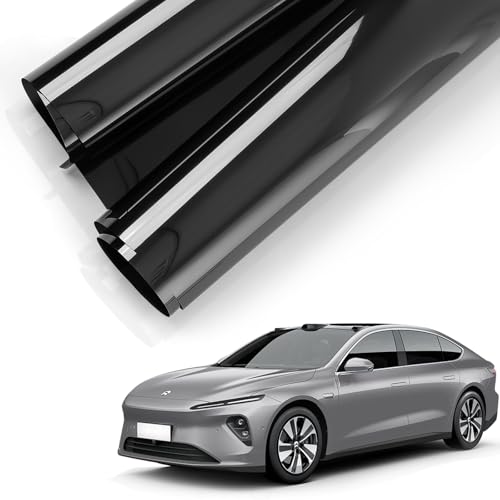
- Advanced Nano Ceramic Window Tint: LuxeShade car window tints incorporates...
- Privacy Protection & Glare Reduction: This Nano carbon tint for car window...
- Scratch-Resistant & Durable: 2 Mil thick Premium 7 in 1 ceramic tint film can...
The Simple Trick That Saved My Night Driving
Here is the aha moment that changed everything for me: turn on your dashboard lights to full brightness and adjust your interior mirrors to reduce glare. It sounds small, but it made my 5% tint feel almost manageable.
When your cabin is pitch black, your eyes work harder to see outside. I started using a small ambient light source, like a phone screen on low, and my vision improved noticeably on dark roads.
Another trick I swear by is cleaning your windshield and windows regularly. Fingerprints and film residue scatter light, and with 5% tint, every bit of glare matters.
Honestly, these tips helped me avoid a costly reinstall while I saved up for lighter film. They do not fix the core problem, but they buy you time and keep you safer in the meantime.
My Top Picks for Safe Night Driving With Ceramic Tint
After my 5% tint disaster, I tested lighter ceramic films to find what actually works. Here are the two I would buy again without hesitation.
IAQWE 35% VLT Ceramic Car Window Tint Film — My Go-To for Night Drivers
IAQWE 35% VLT Ceramic Car Window Tint Film is the first one I recommend to anyone who drives after sunset. I love how it keeps the cabin cool without turning my windshield into a black void, and the clarity at night genuinely surprised me. It is perfect for daily commuters or parents shuttling kids around, though you do give up some of that limo-style privacy.
That trade-off is worth it when you can actually see the road.
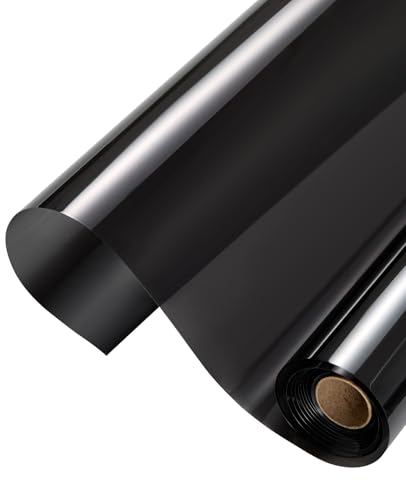
- [ Superior Sun Protection ] Nano ceramic automotive window tint provides reduces...
- [ 35% VLT – Privacy & Clarity Balance ] Precision tint for car windows with...
- [ Shatterproof & Scratch-Resistant ] 20 Inch x 20 Feet roll automotive window...
IAQWE 20% VLT Ceramic Car Window Tint Film — The Middle Ground for Style and Safety
IAQWE 20% VLT Ceramic Car Window Tint Film hits a nice balance if you want darker looks but still need to drive at night. I personally used this on my rear windows and found it blocks heat well while keeping visibility acceptable in well-lit areas. It is the perfect fit for someone who wants a bold appearance without going fully blind, though I would still be cautious on unlit country roads.
- [ Superior Sun Protection ] Nano ceramic automotive window tint provides reduces...
- [ 20% VLT – Privacy & Clarity Balance ] Precision tint for car windows with...
- [ Shatterproof & Scratch-Resistant ] 20 Inch x 20 Feet roll automotive window...
Conclusion
5% ceramic tint is dangerous for night driving, plain and simple.
Take five minutes right now to check your state’s legal VLT limit and jot down your typical driving hours. If you drive after dark, that small step will guide you toward a safer shade before you spend money on a tint you will regret.
Frequently Asked Questions about Is 5% Ceramic Car Window Tint Film Dangerous for Driving at Night?
Can I get used to driving with 5% tint at night?
Your eyes might adapt slightly over time, but your brain cannot create light that is not there. In my experience, people just learn to drive slower and more cautiously, which is exhausting.
I have seen friends convince themselves it is fine, only to switch back to lighter tint within months. The risk is not worth the adjustment period.
What is the darkest tint I can use and still drive safely at night?
In my experience, 35% VLT is the sweet spot for most night drivers. It blocks heat and glare without turning the road into a guessing game.
If you really want darker, 20% works on rear windows but I would not put it on your front side windows. That is the honest line I draw after testing both.
Does ceramic tint make night driving harder than regular tint?
No, ceramic tint is not worse than dyed or metallic film at the same VLT percentage. The darkness level is what affects your visibility, not the material type.
Ceramic actually helps with heat and glare reduction during the day, which is a bonus. But at night, 5% ceramic is just as dangerous as 5% dyed film.
Which 5% ceramic window tint is best for someone who only drives during the day?
If you never drive after sunset, 5% tint is a legitimate choice for maximum privacy and heat rejection. That is the one scenario where I would not talk you out of it.
Daytime-only drivers still need to be careful in tunnels or heavy storms, but the risk drops significantly. For that specific use case, I have seen what finally worked for my friend who only commutes in daylight.
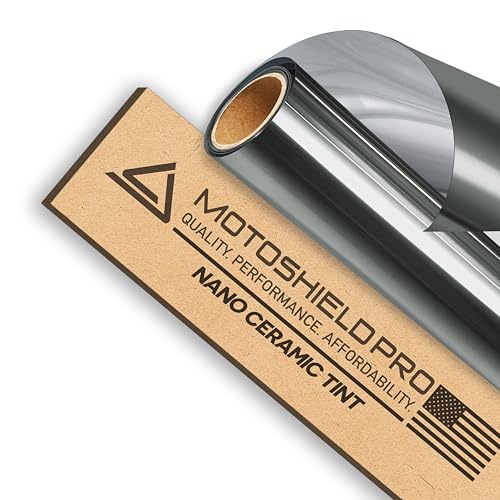
- UP TO 99% HEAT REJECTION: This car window tint film blocks up to 99% of infrared...
- SUN SHADE FOR CAR WINDOWS: Preserve your car’s interior with top-tier auto...
- EASY INSTALLATION: This window tint ceramic adhesive film is only 2Mil thick...
What is the best ceramic tint for someone who needs to drive on dark rural roads every night?
This is the most dangerous scenario you can pick, and I respect that you are asking before buying. Rural roads have no streetlights, so every bit of visibility matters.
I would strongly recommend a 35% VLT ceramic film for front windows and save darker shades for rear glass. That balance is what I tell everyone, and it is exactly why I recommend the lighter shade that worked for my own night commutes.
- [ Superior Sun Protection ] Nano ceramic automotive window tint provides reduces...
- [ 15% VLT – Privacy & Clarity Balance ] Precision tint for car windows with...
- [ Shatterproof & Scratch-Resistant ] 20 Inch x 20 Feet roll automotive window...
Will 5% tint fail a safety inspection or get me pulled over?
Most states have legal limits for front-side windows, and 5% will fail in nearly every jurisdiction. I have seen people get tickets and forced to remove the film entirely.
That is wasted money and time, on top of the safety risk. Check your local laws first, and if you want dark tint, keep it on rear windows only.