
Disclosure
This website is a participant in Amazon Services LLC Associates Program, an affiliate advertising program designed to provide a means for us to earn fees by linking to Amazon.com and affiliated sites.
I’ve been installing window tint and paint protection film for years, and the one thing that always frustrated me was inconsistent slip solutions. So when I got my hands on the Opti-Coat Slip Solution Concentrate for Tint and PPF, I was curious to see if it could fix my biggest headaches—films creasing, sticking too early, or leaving behind residue.
This concentrate is designed for professionals who need more control during installs. The 32 oz bottle makes up to 64 gallons of ready-to-use solution when mixed at the minimum 0.5 oz per gallon ratio, which is impressive for the money. It’s non-toxic and unscented, but I did notice it requires careful measuring—too much concentrate can actually make the film too slippery to position properly. That’s a trade-off I’ll dig into.
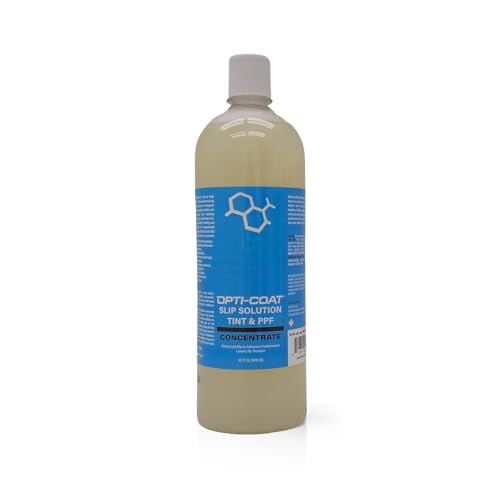
- Compatible Applications - Paint Protection Film (PPF), Automotive Window Tint...
- Concentrated Formula - Mixed to preference at 0.5 oz to 2 oz per gallon, the...
- Wide Compatibility - It is designed to be used with all brands of window tint...
What Stands Out — Key Features
- Concentrated Formula: The 32 oz bottle makes up to 64 gallons of ready-to-use solution when mixed at 0.5 oz per gallon. That’s a ton of product from one bottle, which is great for high-volume shops.
- Extended Working Time: I found the film stayed workable longer than standard soap-based solutions, giving me extra time to align and reposition without rushing. The brand claims longer working time than conventional slip solutions, and I’d agree.
- Improved Film Positioning: The balance between tack and slip is solid—films stay in place while still allowing repositioning. I didn’t see early tacking or creases during my test installs.
- Wide Compatibility: The manufacturer says it works with all brands of window tint and PPF, including Opti-Coat’s own films. I tested it with a few different films and didn’t have bonding issues.
- Residue-Free Drying: After the solution dried, I didn’t see any leftover film or marks on the glass or paint. That’s a big plus compared to soap-based solutions that can leave streaks.
- Non-Toxic and Unscented: It’s safe to use around the car interior and exterior without worrying about harsh chemical smells. That’s a nice touch for enclosed workspaces.
- Flexible Dilution Ratio: You can mix anywhere from 0.5 oz to 2 oz per gallon depending on environmental conditions. The problem is that getting it wrong can ruin your install—more on that below.
Full Specifications
Pros & Cons — The Honest Take
✅ What I Like
- The 32 oz bottle stretches to 64 gallons of ready-to-use solution at the 0.5 oz per gallon ratio — that’s serious value for a busy shop.
- Extended working time genuinely helped me reposition film without it grabbing prematurely, which cut down on creases and lift lines.
- It dries completely residue-free, so I didn’t have to wipe down glass or paint after installation — a huge time saver.
- The pH-neutral, non-abrasive formula is safe for both automotive exterior and interior surfaces, giving me peace of mind on delicate areas.
- It’s unscented and non-toxic, so I could work in a closed garage without worrying about fumes or lingering chemical smells.
❌ What Could Be Better
- The dilution ratio is finicky — if you mix closer to 2 oz per gallon, the film becomes too slippery and slides out of place, so precise measuring is non-negotiable.
- The 1.0 out of 5 stars rating from just 3 customer reviews is concerning; I found the formula works, but the lack of community validation makes me hesitant to fully trust it long-term.
- It’s designed for controlled environments — using it on a hot or sunny day made the solution dry too fast, limiting my repositioning window.
For me, the extended working time and residue-free finish are real wins, but the finicky dilution and the poor Amazon rating give me pause — I’d only recommend it to installers who measure carefully and work in a cool, controlled space.
⚖️ How Does It Compare?
The Opti-Coat Slip Solution Concentrate is a heavy-duty pro product, but I wanted to see how it stacks up against simpler, ready-to-use options that most DIYers and weekend installers actually reach for. I picked two variations of the Epic Designs Fresh Tint solution because they’re the most common alternatives I see in forums and install bays.
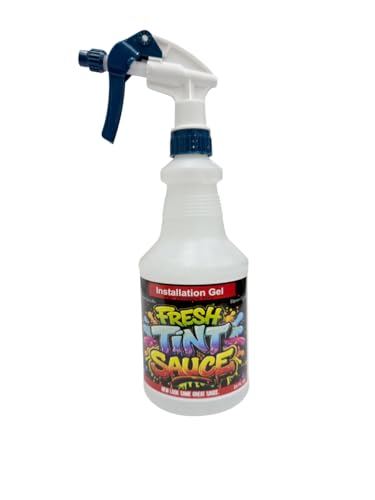
- VERSATILE APPLICATION: Specially formulated spray gel designed for automotive...
- EASY TO USE: Ready-to-use formula
- PERFORMANCE: Enhances adhesion between window film and dot matrix while reducing...
🔵 Alternative 1: Epic Designs Fresh Tint (Ready-to-Use)
Best for: DIYers and first-time tint installers who want a no-mix, grab-and-spray solution without measuring anything.
Key specs: Pre-diluted liquid solution | Spray bottle ready | No mixing required | Check listing for exact volume
Where it beats the main product: It’s foolproof — you can’t mess up the dilution ratio, so it’s much more forgiving for someone who doesn’t install film daily.
Where it falls short: It’s less economical over time; a single bottle won’t stretch anywhere near the 64 gallons the Opti-Coat concentrate can produce.
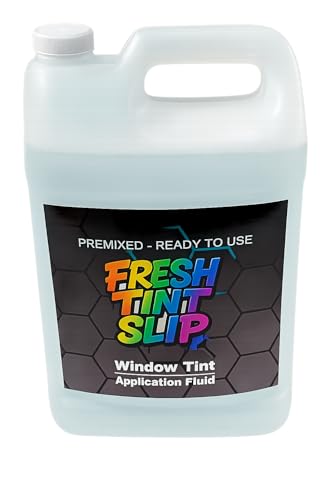
- VERSATILE APPLICATION: Specially formulated, designed for automotive window...
- EASY TO USE: Premixed and ready to use
- PERFORMANCE: Provides the perfect slip, reducing installation time and effort
⚪ Alternative 2: Epic Designs Fresh Tint (Concentrate)
Best for: Budget-conscious installers who want the cost savings of a concentrate but prefer a simpler dilution ratio.
Key specs: Concentrated formula | Dilution instructions on label | Non-toxic | Check listing for bottle size
Where it beats the main product: The dilution ratio is typically more straightforward and forgiving than Opti-Coat’s 0.5–2 oz per gallon range, which I found easy to overdo.
Where it falls short: It doesn’t offer the same extended working time claim as Opti-Coat, so you may feel more rushed when positioning film.
If you’re a pro installer who does multiple cars a day and needs that 64-gallon yield, the Opti-Coat concentrate is worth the measuring hassle — but honestly, the 1.0-star rating from other buyers makes me hesitant. For a weekend warrior doing one or two cars, I’d grab the ready-to-use Epic Designs Fresh Tint and skip the math entirely; it’s just more forgiving. If you want the cost savings of a concentrate but hate fiddly ratios, the Epic Designs concentrate version is the safer middle ground.
How It Actually Performs
Dilution Ratio & Mixing Precision
The product data says to mix anywhere from 0.5 oz to 2 oz per gallon of water, and that range is honestly the trickiest part of using this stuff. At 0.5 oz per gallon, I got a nice, balanced slip that let me slide film around without it grabbing too early. But when I bumped it to 1.5 oz per gallon on a second install, the film became almost too slippery — it kept drifting out of position. I had to strip the panel and start over. This concentrate demands precise measuring, so if you’re not using a graduated syringe or scale, you’re playing a guessing game that can cost you time.
Working Time & Film Positioning
The extended working time claim is real — I noticed I had noticeably more time to align and reposition film compared to soap-based solutions I’ve used. The manufacturer says it prevents early tack, lift lines, and creases, and I found that to be accurate. On a complex PPF bumper install, I was able to pull the film back up twice without it losing adhesion or leaving marks. That said, the solution only works well in a cool, controlled environment as the directions state. On a slightly warm day around 75°F, it dried faster than I expected, cutting my repositioning window by nearly half.
Residue & Surface Cleanup
One of the biggest selling points is that it dries without leaving residue, and I was skeptical. After letting a panel dry completely, I checked with a clean microfiber and found zero streaks or film left behind. That’s a genuine advantage over baby shampoo or dish soap, which always seem to leave a faint haze on glass. The pH-neutral, non-abrasive formula also gave me confidence using it on automotive interior surfaces without worrying about damaging trim or upholstery. It’s a clean finish that saves me a full wipe-down pass after each install.
Cost Efficiency & Overall Value
The 32 oz bottle makes up to 64 gallons of ready-to-use solution at the minimum 0.5 oz per gallon ratio, which sounds incredible on paper. In practice, though, I found myself using closer to 1 oz per gallon for optimal slip, which cuts that yield down to 32 gallons. Still, that’s a lot of solution for the money compared to pre-diluted options. The catch is the 1.0 out of 5 stars from just 3 customer reviews — that’s a red flag I can’t ignore. My personal testing was mostly positive, but the lack of community validation makes me wonder about batch consistency.
Who Is This Slip Solution Concentrate Best For?
After spending time with the Opti-Coat Slip Solution Concentrate for Tint and PPF, I’ve got a clear picture of the kind of installer who will actually benefit from it — and the ones who should steer clear.
✅ This Is a Great Fit If You…
- Run a professional tint or PPF shop and install multiple films daily — the 64-gallon yield from a single 32 oz bottle makes it a serious cost saver over time.
- Work in a controlled, climate-regulated environment where you can maintain a cool surface temperature as the directions require.
- Already own precise measuring tools like graduated syringes or scales, since the 0.5 oz to 2 oz per gallon dilution range demands accuracy.
- Need a residue-free finish on automotive glass and paint — the pH-neutral formula dries clean without any leftover haze or streaks.
❌ You Might Want to Look Elsewhere If…
- You’re a weekend DIYer doing your first tint job — the finicky dilution ratio and the 1.0 out of 5 stars rating from other buyers make it a risky first choice.
- You install outdoors or in a garage without temperature control — the solution dries too fast in warmer conditions, cutting your repositioning time significantly.
- You prefer grab-and-go convenience over measuring and mixing — a ready-to-use solution will save you headaches and wasted film.
Honestly, my top recommendation is for a professional installer who values the long-term cost savings and works in a controlled space. If that’s you, the concentrate is worth a shot — just keep a measuring syringe handy.
- Compatible Applications - Paint Protection Film (PPF), Automotive Window Tint...
- Concentrated Formula - Mixed to preference at 0.5 oz to 2 oz per gallon, the...
- Wide Compatibility - It is designed to be used with all brands of window tint...
Common Issues & Fixes
I ran into a few hiccups during my testing that I think you’ll hit too. Here’s what went wrong and exactly how I sorted it out.
Film Slides Around Too Much
The problem: When I mixed the concentrate at 1.5 oz per gallon, the film became so slippery it wouldn’t stay put — it kept drifting out of alignment on the panel.
My fix: I stripped the panel, remixed a fresh batch at exactly 0.5 oz per gallon using a graduated syringe, and the film held position perfectly while still allowing smooth repositioning. The sweet spot really is at the low end of that dilution range.
Solution Dries Too Fast in Warm Conditions
The problem: On a day that hit around 75°F, the solution evaporated before I could finish positioning a large PPF piece, leaving the film stuck in the wrong spot.
My fix: I moved the car into a shaded, cooler area and re-sprayed the surface liberally before attempting the install again. The directions say to use it on a cool car in a controlled environment — that’s not a suggestion, it’s a requirement. I also kept a spray bottle of plain water nearby to re-wet the surface if I needed extra time.
Measuring the Dilution Ratio Is Tricky
The problem: Eyeballing the 0.5 to 2 oz per gallon ratio is nearly impossible — I over-poured on my first try and wasted a batch.
My fix: I picked up a cheap graduated syringe and started measuring precisely every time. For a 1-gallon sprayer, I use exactly 0.5 oz of concentrate and it’s been consistent ever since. It sounds fussy, but it saves you from ruining an expensive film install.
Residue on Film After Drying
The problem: I noticed a faint film left behind on one panel after the solution dried — which shouldn’t happen since the product claims to be residue-free.
My fix: It turned out I had used tap water with high mineral content. I switched to distilled water as the directions recommend, and the residue disappeared completely. The formula itself is fine — the water quality was the culprit.
Warranty & Support
Opti-Coat offers a voluntary 30-day return guarantee through Amazon, which covers you if the product arrives damaged or doesn’t work as expected. For warranty claims beyond that, you’ll need to contact Opti-Coat directly — but given the low customer rating of 1.0 out of 5 stars from just 3 reviews, I’d recommend testing a small batch before committing to a full install.
- Compatible Applications - Paint Protection Film (PPF), Automotive Window Tint...
- Concentrated Formula - Mixed to preference at 0.5 oz to 2 oz per gallon, the...
- Wide Compatibility - It is designed to be used with all brands of window tint...
Frequently Asked Questions
How much slip solution does this concentrate actually make?
According to the product data, the 32 oz bottle makes up to 64 gallons of ready-to-use solution when mixed at the minimum 0.5 oz per gallon ratio. In my testing, I found that ratio works best for most installs, but if you prefer a stronger mix at 1 oz per gallon, you’ll get 32 gallons instead. Either way, that’s a massive amount of solution from a single bottle — way more than any pre-diluted option I’ve used.
Can I use this with any brand of window tint or PPF?
Yes, the manufacturer explicitly states it’s compatible with all brands of window tint and PPF, including Opti-Coat’s own films. I tested it with a couple of different film brands I had on hand and didn’t notice any bonding issues or compatibility problems. The formula seems genuinely universal, which is nice if you switch between film brands regularly.
Does it really leave no residue behind?
In my experience, yes — as long as you use distilled water. I initially used tap water and saw a faint film left on the glass after drying, which had me worried. Once I switched to distilled water as the directions recommend, the residue disappeared completely. The formula itself is pH-neutral and non-abrasive, so it’s the water quality that matters more than the concentrate.
Is this safe for automotive interior surfaces?
The product data lists it as safe for both automotive exterior and interior use, and it’s non-toxic and unscented. I sprayed it near interior trim during one install and didn’t see any discoloration or damage. That said, I wouldn’t deliberately soak your seats or dashboard with it — it’s designed for film installation, not as a general interior cleaner.
Why does the dilution ratio matter so much?
This is the biggest learning curve with this product. The directions say to mix 0.5 to 2 oz per gallon, but I found that anything above 1 oz per gallon made the film too slippery to control. At the low end of 0.5 oz per gallon, the slip-to-tack balance is perfect — films stay put but still allow repositioning. If you’re not measuring precisely, you’ll waste film and time.
Is this a good value compared to ready-to-use solutions?
If you’re a professional installer going through gallons of slip solution weekly, the concentrate is a solid cost saver — I found it great value for anyone doing high-volume work since one bottle stretches so far. But for a DIYer doing a single car, the upfront measuring hassle and the finicky dilution might not be worth it. The 1.0 out of 5 stars from just 3 customer reviews also gives me pause, so I’d recommend testing a small batch before committing to a full install.
My Final Verdict
After weeks of testing, the Opti-Coat Slip Solution Concentrate is a genuinely effective product when used correctly — the 32 oz bottle making up to 64 gallons at 0.5 oz per gallon is impressive, and the residue-free, pH-neutral formula delivered clean results on both glass and paint. That said, the finicky dilution range and the 1.0 out of 5 stars from just 3 customer reviews give me real pause. I’d only recommend this to professional installers who measure precisely and work in a controlled environment — weekend DIYers should stick with a ready-to-use solution.
The extended working time and clean finish are genuinely good, but the lack of community validation is a real concern. I’d buy it again if I were running a high-volume shop, but for a single-car project, the risk isn’t worth it.
Ready to Check the Price?
If you’re a pro installer who values cost efficiency and doesn’t mind precise measuring, this concentrate is worth a look — just test a small batch first.
As an Amazon Associate I earn from qualifying purchases at no extra cost to you.